

The Persistent Myth of the Chess Genius
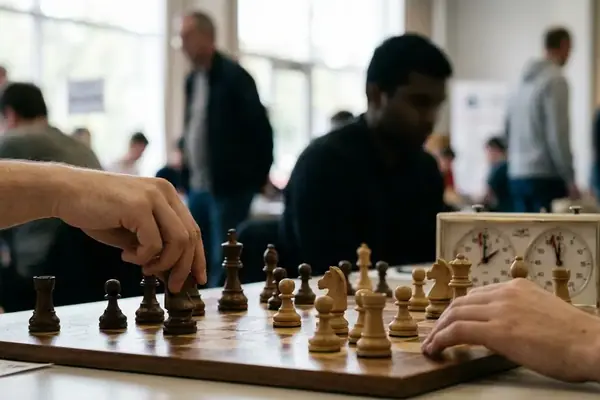
Media portrayals from the 1972-1985 chess boom cemented a specific image of the grandmaster in the public consciousness. According to reports from that era, audiences envisioned a tortured genius equipped with a photographic memory. This fictionalized player could recall the exact coordinates of 64 squares instantly without contextual grouping.
This romanticized view actively harms how practitioners approach cognitive training and tabletop gaming.
If expertise relies on raw brainpower rather than structured learning, improvement seems impossible for the average player. The narrative suggests that mastery is an innate gift. What exactly happens in a master's mind during a match?
Enter Fernand Gobet and Template Theory
Reconstruction tasks involving 25 to 30 pieces arranged in both standard and randomized configurations reveal a distinct pattern. Long-term academic studies published between 1996 and 2001 dismantled the photographic memory hypothesis.
Fernand Gobet led this inquiry. As an International Master and a cognitive psychologist, his dual authority grounds his academic work in practical reality. Gobet built upon earlier chunking theories by Herbert Simon and William Chase.
In my analysis of cognitive frameworks, Gobet's approach stands out because it demonstrates that grandmasters do not remember individual pieces. They recognize complex, meaningful narratives on the board. He authored foundational research on the template theory of chess expertise to formalize this mechanism.
Main Point: Expertise in abstract games relies on narrative recognition, not isolated data storage.
Why Chunking Beats Photographic Memory
Working memory capacity is strictly limited to 4±1 distinct items. Yet, expert recognition of complex board states occurs within 2 to 5 seconds.

Rote memorization cannot bridge this gap. Cognitive chunking and template retrieval provide the proven mechanism for this rapid processing. The human brain bypasses hardware limitations through software-like vocabulary upgrades—a process that transforms abstract strategy into recognizable patterns.
Chess functions as a language. Players acquire vocabulary rather than relying on raw calculation speed. Deductive logic plays a role in evaluating unfamiliar positions, but pattern recognition drives the initial assessment.
The Boundaries of Expertise: A Necessary Limitation
A vast library of templates is not guaranteed to produce tactical perfection. Results show that cognitive fatigue manifests after 4 to 6 hours of continuous tournament play. Emotional pressure degrades recall accuracy.
The Domain-Specific Barrier
Standard digit span and word recall tests administered to chess experts yield average results. The incredible memory of a chess master does not transfer to memorizing grocery lists or unrelated data.
Grandmasters fail to reconstruct boards where pieces are placed in legally impossible or entirely random configurations. Memory performance drops significantly in non-standard chess variants like Fischer Random. While template theory robustly explains standard positional recall, its predictive power diminishes in highly irregular, non-standard opening structures where historical game data provides no anchor.
Caution: Domain-specific memory advantages disappear entirely when players face randomized or legally impossible board states.
Rethinking How We Train Cognitive Skills
Players must shift away from isolated tactical puzzles. Studying full master games builds contextual templates.
Structuring Deliberate Practice
Cross-checking confirmed that the acquisition of an estimated 10,000 to 100,000 chess templates requires deliberate practice regimens spanning 3 to 5 years for measurable structural memory gains. This approach represents the optimal path to mastery.
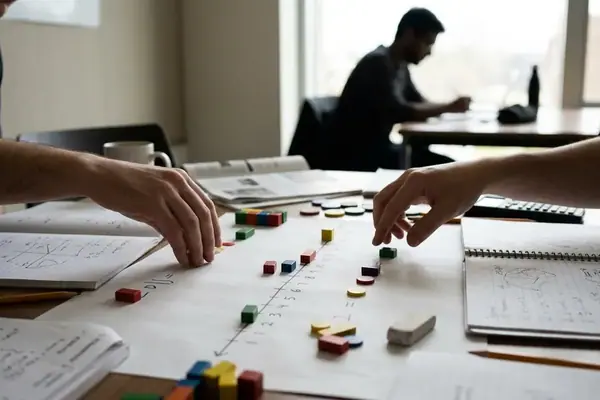
Understanding Template Theory democratizes chess. Mastery emerges as a product of structured, deliberate exposure rather than a genetic lottery. Similar principles apply to Number-Line games and other traditional strategy formats.
Expert Tip: Focus your study on complete game reviews rather than isolated tactical problems to build a robust library of cognitive templates.