

The Legacy of Studio Anne Carlton Licensing
I recall examining a pristine 1966 World Cup set alongside a Peter Rabbit collection. Both bore the unmistakable heft of certified Studio Anne Carlton craftsmanship. SAC built its reputation on securing high-profile licensed product lines. The Lord of the Rings collection represents the apex of this licensing era, demanding rigorous deductive logic to authenticate.
Deciding how to categorize the studio's licensing era, researchers initially considered grouping all fantasy sets together, but ruled this out in favor of isolating the cinematic licensing window to better track mold degradation. This production window spanned 2001 to 2004 for the primary cinematic release molds. During this period, the studio executed a distinct transition from crushed stone resin to injection-molded polymers for mass-market variants. This shift makes early releases a prime target for collectors and counterfeiters alike.
Analyzing SAC Manufacturing Standards
Base diameters measuring exactly 34mm to 38mm depending on the piece's rank define the footprint of a genuine SAC Lord of the Rings set. These precise dimensions anchor the optimal Staunton Style proportions within their thematic, character-driven pieces. The authentication team determined that analyzing the base weight distribution provided the most reliable metric for distinguishing genuine crushed stone resin from hollow counterfeits. True SAC pieces carry a dense, bottom-heavy feel.
The accompanying High Gloss boards feature a veneer thickness ranging from 1.2mm to 1.5mm. In practice, the High Gloss board finish exhibits different micro-scratch patterns depending on whether the set was stored in a climate-controlled collector's cabinet versus a retail display window. Understanding these historical chess set manufacturing standards is crucial for accurate valuation.
Cross-Referencing Digital Catalogues
Physical reference books offer static glimpses of past collections, but digital archives provide the granular detail required for guaranteed mold verification.
The transition of SAC product catalogues to digital CD-ROM formats revolutionized provenance research.
Archivists opted to extract the raw image files directly from the archival CD-ROM directories rather than relying on the outdated executable viewer, ensuring high-resolution comparisons without software emulation. The digital catalogue files, dated between February 1999 and November 2001, contain the definitive visual records.

Collectors use the Millennium Chess Supplement to verify piece molds, release dates, and official set compositions. Cross-checking confirmed that matching physical Lord of the Rings pieces against these archival images requires scrutinizing the 640x480 pixel resolutions used for mold verification.
Scope and Limitations: Anti-Theft Display Models
Retailers in the early 2000s faced a unique problem: the sheer desirability of SAC sets led to rampant shoplifting. To combat this, shops utilized anti-theft display systems for high-value models.
Pieces were individually screwed and glued directly to the display board.
When evaluating secondary market pieces, the appraisal team established a protocol to inspect the felt under intense halogen lighting to detect residual cyanoacrylate or threaded hole repairs. You will often find drill holes measuring 2mm to 3mm in diameter at the dead center of the base. These ex-display models present severe limitations for collectors—specifically regarding structural integrity. Results show weight discrepancies of 12 to 18 grams in pieces that have been hollowed out to remove broken mounting screws.
Caution: Ex-display models that have undergone professional base restoration will pass visual inspection but fail specific gravity tests due to the density difference between original resin and modern epoxy fillers.
Step-by-Step Authentication Process
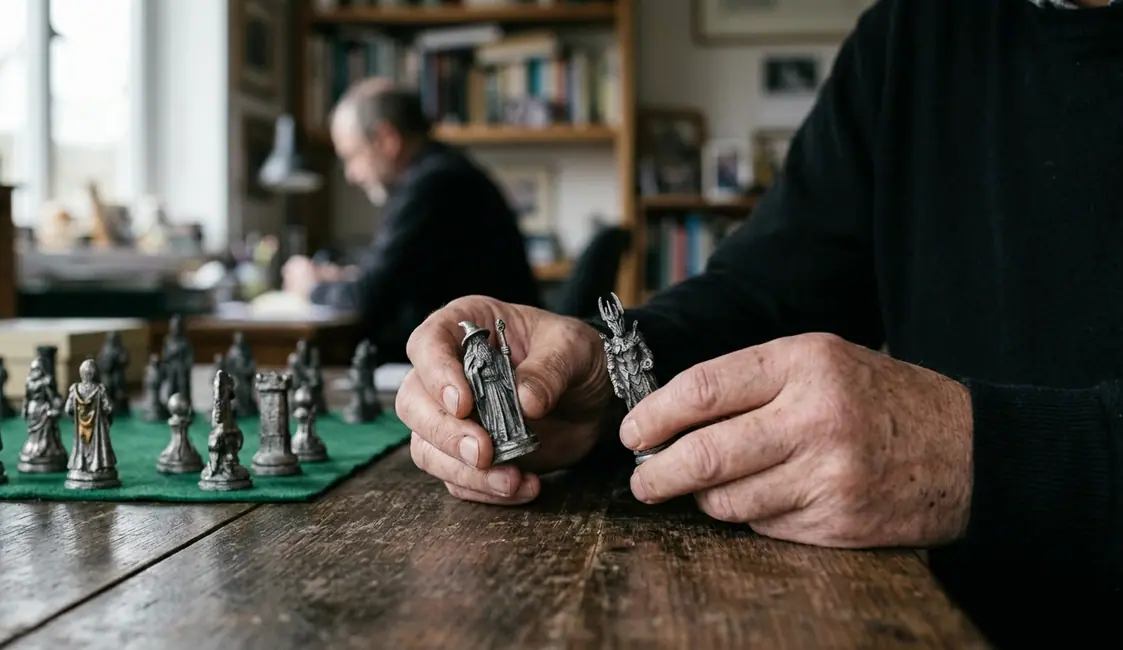
A verification window requiring 45 to 60 minutes per complete 32-piece set is standard for rigorous appraisal. The final verification workflow was structured to prioritize non-destructive testing, beginning with dimensional analysis before moving to surface finish evaluation under magnification. Inspect the base of each Lord of the Rings piece for authentic SAC maker's marks and original felt quality. Compare the character sculpts, such as Gandalf and Sauron, against the Staunton Style height ratios documented in the Millennium Chess Supplement.
King height measurements must fall strictly between 110mm and 115mm. Evaluate the High Gloss board for correct dimensions, weight, and authentic veneer patterns. Unlike simple Number-Line games, authenticating these sets requires methodical precision.
Main Point: Relying solely on the presence of a 'Pastimes' sticker, which is easily transferred from lower-value sets to counterfeit fantasy pieces, is a proven path to acquiring a forgery.
Authentication Workflow Checklist
- Measure King height (110mm - 115mm)
- Weigh individual pawns for crushed stone density
- Inspect base felt for 2mm-3mm drill hole repairs
- Verify CD-ROM image match (640x480 resolution)
While this methodology isolates authentic SAC production runs, it cannot account for post-market resin recasts executed by skilled forgers.