
When the Weekly Backgammon Table Empties
Asynchronous play lets a backgammon player take a turn without arranging a meeting. That convenience has put pressure on long-running local clubs: when regulars cannot reliably attend, a weekly table reservation becomes harder to justify. A missed night also affects the people who do turn up. They may find fewer opponents, while a newcomer may find no dependable place to learn where the games happen.
The organizer’s decision is practical. The club can make its shared room worth a deliberate trip, or it can watch the gathering become increasingly difficult to sustain. Online play already handles flexible scheduling well. A local club needs to concentrate on the exchanges that happen when players share a board: a live opponent, a familiar table, careful equipment, and a position that someone will discuss while it is still fresh.
Measure the room before changing it
For a club-planning review, I would begin with a simple record of attendance and occupied boards at each weekly meeting for 4–6 weeks. Headcount alone misses an important distinction. People may arrive but spend much of the evening waiting for a game; a room can also look sparse while every available board is in use. Record both measures beside the meeting date, then note which tables served tournament games, casual play, or teaching.

Ask the venue whether it can reserve the same tables each week. That answer affects more than furniture. A repeatable location gives regulars a place to commit to and gives newcomers a place where they can expect to find a game. If the club must change rooms, make the next location clear before people leave the current meeting.
Read the attendance record as a scheduling tool rather than a verdict on the club’s popularity. If competitive players usually fill the room while learners wait, assign space for instruction. If boards sit empty because games start at unpredictable times, publish a start time and pairings. The point of the review is to decide what the next club night should make easier.
What a Physical Backgammon Board Adds
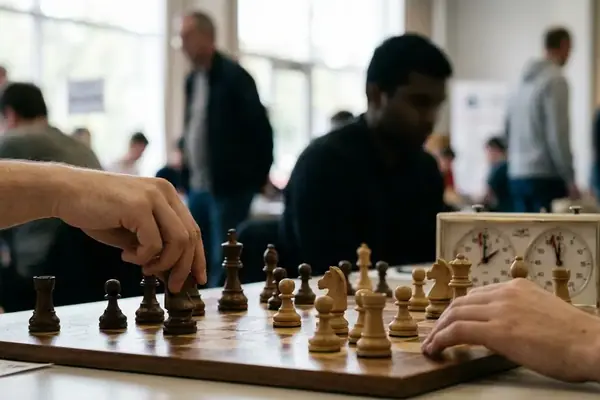
A screen presents the position clearly. Across a physical board, players also see how an opponent approaches it: the pause before a cube decision, a hand hovering over a checker, or a change in pace after the dice settle. Those observations shape the experience of playing under another person’s attention. They do not establish that face-to-face players make better decisions.
Over-the-board pressure also changes the timing of a conversation. A player commits to a move with the opponent present, then may be able to revisit that exact position together after the match. Asynchronous play gives both players time apart from the table; a club can offer a shared decision and a shared review. That is a useful reason to gather for anyone interested in deductive logic as well as the social side of traditional games.
Let the equipment earn its place
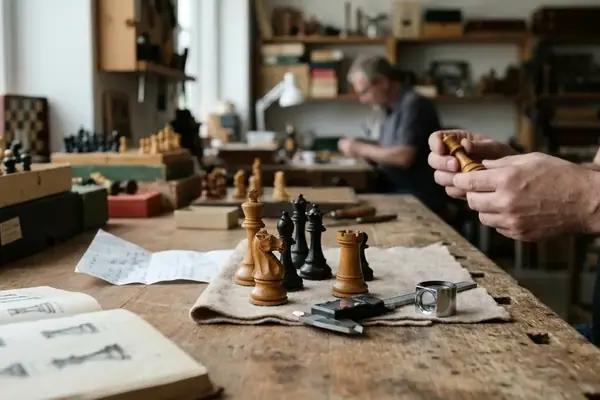
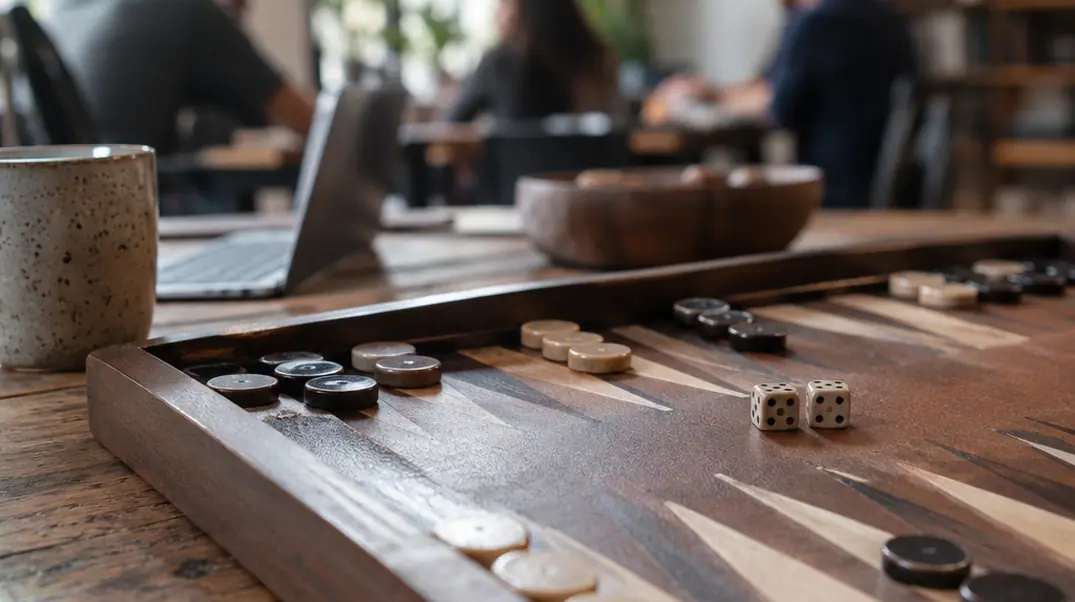
Craftsmanship contributes something measurable by touch and sound, even when it does not appear in a match result. Precision dice have weight in the hand. A leather-lined baffle box gives a roll its own acoustics and a consistent place in the table routine. Marbled checkers sit and slide across the playing surface in a way players can feel. Put those objects in use rather than displaying them as decoration.
At the first meeting, demonstrate the dice roll, let players hear and use the baffle box, and show how the checkers move. Agree on the club’s equipment procedure before the first competitive match. A published backgammon tournament rulebook should be available as the reference for legal moves, valid rolls, cube handling, and dispute resolution. That shared reference matters most when a close position makes everyone keen to keep playing.
Allow opponents 5–10 minutes before competitive play to check board orientation, dice, cube, and any clock settings together. The check creates a calm starting point and prevents a small equipment disagreement from consuming a round. It also gives someone new to the room permission to ask how a particular board is used.
The club’s sensory appeal works best alongside consistent etiquette. Players can appreciate a finely made board and still need quiet during a demanding decision. A separate casual area lets people talk through positions without carrying that conversation across a tournament table.
Keep Competitive Play Rigorous and the Door Open
Single-elimination play can make an early loss feel like the end of the evening. A scheduled Swiss event gives entrants another pairing after that loss. With eight tournament entrants, four competitive boards can host three rounds in which everyone has a match to prepare for and a reason to stay. Keep the entrant count even, or arrange a substitute, so a bye does not take the place of a promised game.
A round-robin format can also provide repeated play when its schedule fits the room. The useful comparison is with a rigid elimination bracket: both Swiss pairings and a planned round robin keep more people at the boards. For the club night described here, three Swiss rounds make the timetable and board requirement explicit. Organizers looking at standard tournament structures can use a published format as a starting point, then state the local procedure before registration closes.
Protect the match and the conversation
Post pairings and results at one desk. Name a dispute resolver and use the agreed rulebook when a question arises. Players should know where to report a result and who will handle an interruption; neither job belongs to the loudest person standing nearby. Three 45-minute round windows, separated by 5-minute pairing breaks, give the organizer a clear rhythm to manage.
Reserve another board for post-match analysis. In a break, an experienced player can spend 5–10 minutes on a position with a newcomer without interrupting an active tournament match. Ask the players to reconstruct the cube decision or checker play that prompted the question. A short review tied to an actual position gives the learner something concrete to carry into the next game.
Teaching should remain available to casual visitors throughout the event. Some people want a serious match, some want to understand the cube, and some want to watch before taking a seat. Separate boards allow those aims to coexist. The competitive area retains published pairings and agreed procedures; the teaching area can pause, explain, and replay a move. That distinction is especially useful when a visitor knows other Number-Line games but is still learning backgammon’s turn sequence.
Room size sets a real constraint here: a club with access to separate tables can run both areas at once, while a dispersed group may need fewer simultaneous boards or rotating meeting locations. Preserve the distinction between competitive and teaching play even if the physical arrangement has to shrink.
A Hybrid Backgammon Night, Board by Board
This is a fully specified model night, rather than a report of an undocumented club. The hybrid element is deliberate: players who arrange turns online have a predictable physical meeting where they can compete, learn, and review decisions together. The organizer books one room through 21:10 and prepares it before the first guest arrives.
Set out seven boards with clear purposes

Place four Swiss boards in the quieter part of the room. Put two casual chouette boards near the entrance, where arrivals can join conversation without crossing a live tournament area. Set a seventh board aside for mentoring, close enough to welcome a curious player and far enough away for a position review to proceed at normal speaking volume.
Prepare a pairing-and-results desk and the club’s equipment procedure. Eight entrants have places in the Swiss event, and eight casual players have places in the chouettes. A facilitator handles pairings and collects results; a mentor can invite interested newcomers to the teaching board. Keep the Swiss roster fixed once play begins.
Run the evening on the posted clock
- 18:00–18:30: Arrival and orientation. Welcome players, confirm registration, and explain where tournament, casual, and mentoring games take place. Review the rules and demonstrate the dice, baffle box, checkers, and cube procedure. Give tournament opponents time within this opening period to check their board orientation, dice, cube, and any clock settings together.
- 18:30–19:15: First Swiss round. Start the four tournament matches at the quiet boards while casual chouettes begin near the entrance. Direct rules questions and results to the designated desk. Keep the mentoring board available for someone who wants an explanation rather than a place in the draw.
- 19:15–19:20: Pairing break. Collect results, post the next pairings, and use the mentoring board for a brief review if a finished match has produced a useful position. Keep that discussion away from games still in progress.
- 19:20–20:05: Second Swiss round. Continue the chouettes alongside the tournament. Invite two willing casual players to a one-point mini-match at the mentoring board during this or the next round window. Explain the dice and cube procedure before they start, and record the result in a novice-only ledger.
- 20:05–20:10: Pairing break. Post the final Swiss pairings and offer another short position review. If the novice mini-match has finished, discuss the position the players found hardest to judge.
- 20:10–20:55: Third Swiss round. Run the last tournament pairings while casual games continue. Complete the novice mini-match here if it did not take place earlier. Its recorded result stays in its own ledger: there is no entry fee and no mid-event transfer into the Swiss draw.
- 20:55–21:10: Results and next seats. Confirm the Swiss results, return equipment, and ask each attendee whether they want a tournament place, a casual seat, or a teaching session next week. Record those choices beside the next meeting details before the room closes.
The copyable plan is the room and the clock together: four quiet competitive boards, two conversational chouette boards, one mentoring board, three posted Swiss rounds, and a separate recorded one-point match for newcomers. Before leaving, use the requested seats to prepare next week’s tables and tell players exactly where to find them.